Corporate Services in Hong Kong: What You Actually Have to Buy
Company secretary, audit, payroll, trademarks, advisory. Which ones you legally have to have, which can wait, and roughly what each should cost.
Read the guide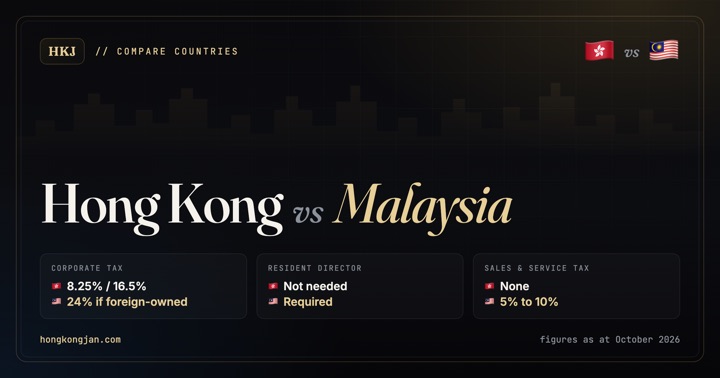
Hong Kong or Malaysia? It Depends Where Your Staff Sit
Why Malaysia's 15% SME rate rarely applies to foreign owners, and when a Sdn Bhd still beats Hong Kong.
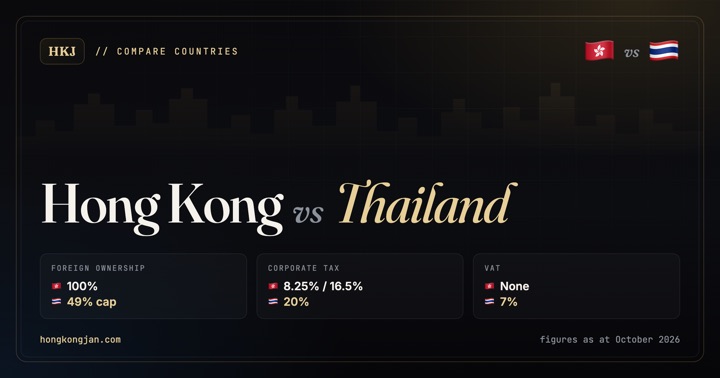
Hong Kong or Thailand? Start With the 49% Rule
The 49% ownership cap, the nominee crackdown and work permit rules, compared honestly with a Hong Kong company.
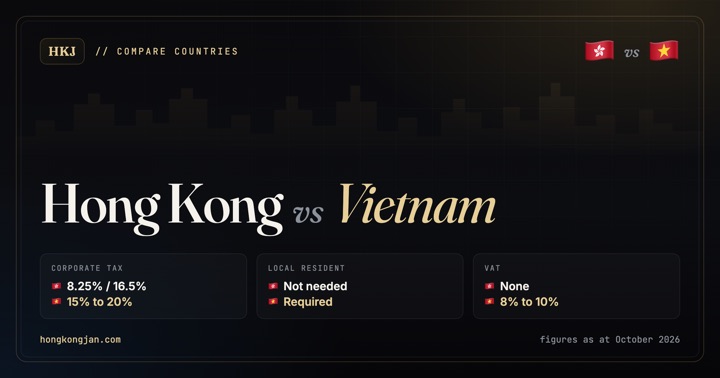
Hong Kong or Vietnam? Often the Answer Is Both
Setup steps, the new CIT rates, VAT, audits and getting profit out, plus why Hong Kong often sits on top of Vietnam.
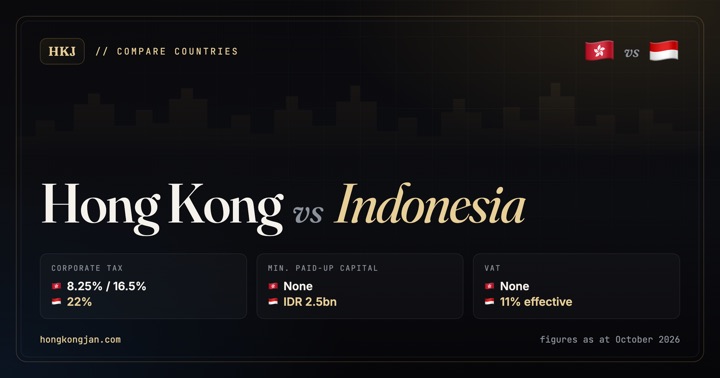
Hong Kong or Indonesia? Base or Market, and the New PT PMA Rules
The PT PMA capital cut, the 0.5% tax foreigners can't use any more, and when Hong Kong on top makes sense.
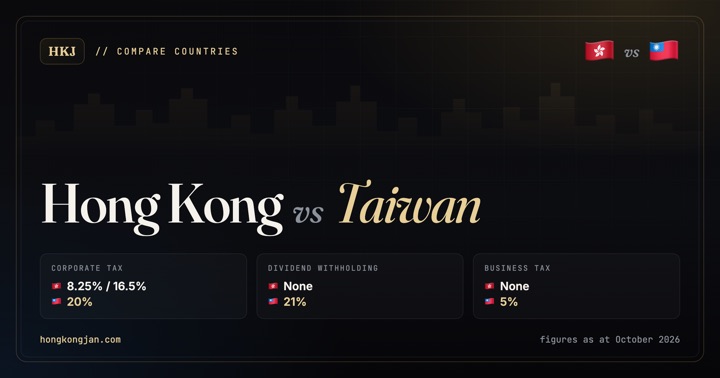
Hong Kong or Taiwan? It Depends Where You Need to Be
Investment approval, capital, 20% tax, the 21% dividend withholding and why a Hong Kong parent doesn't reduce it.
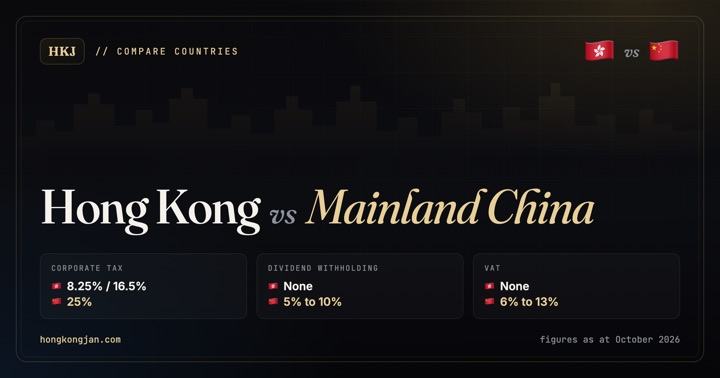
Hong Kong or Mainland China? Usually You Need Both
WFOE rules, the five-year capital rule, 25% tax versus the 5% small company rate, and getting dividends out via Hong Kong.
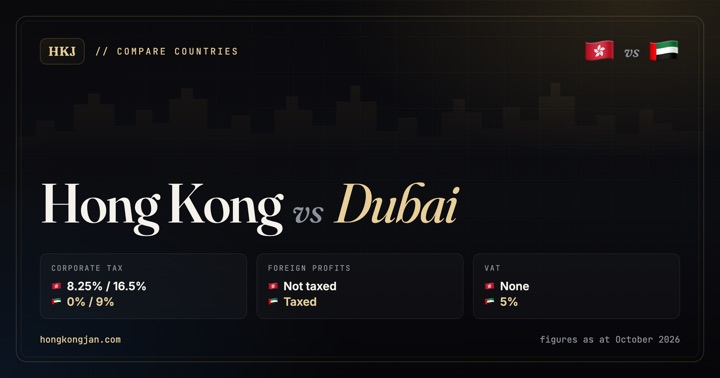
Hong Kong or Dubai? An Honest Comparison
UAE 9% tax, free zone 0%, visas and licence renewals, compared honestly with a Hong Kong company.
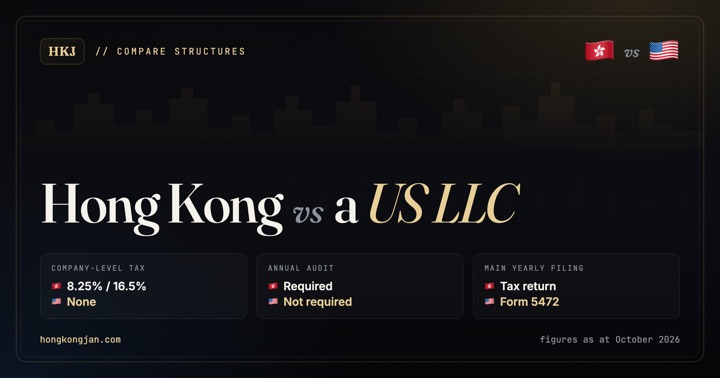
Hong Kong Company or US LLC? A Guide for Non-US Founders
Why a US LLC moves tax home rather than removing it, the USD 25,000 form people miss, and when Hong Kong fits better.

Working Remotely From Thailand: Visa, Tax and Company Setup
The DTV, the new 30-day visa exemption, the 180-day tax line, and how to invoice foreign clients without trouble.

Thailand Tax for Digital Nomads: The 2026 Rules
The 180-day test, the 2024 remittance rule, why the DTV isn't tax-free, and how Hong Kong company dividends are taxed.

Does a Hong Kong Company Work for a Digital Nomad?
Offshore claims, CRS, CFC rules and banking with no fixed address. What a Hong Kong company really does for a nomad.
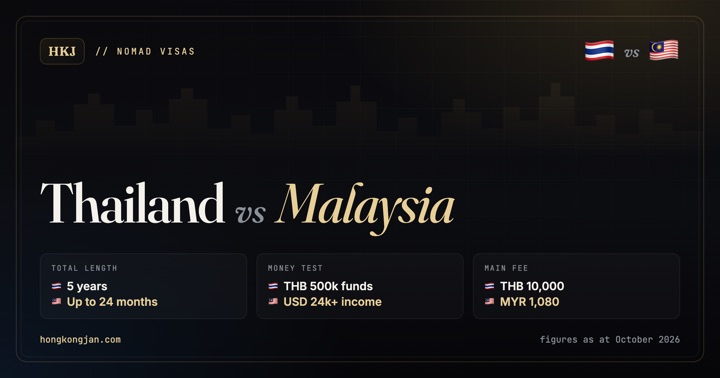
Thailand DTV or Malaysia DE Rantau? Picking a Nomad Visa
Five years in Thailand or two in Malaysia? Income tests, fees, family rules and the tax catch on both nomad visas.

Setting Up a Hong Kong Company Without Ever Flying There
The incorporation takes about three days and happens entirely online. It's everything after it that catches people out.

Opening a Hong Kong Business Bank Account as a Non-Resident
Incorporation takes three days. A traditional bank account can take three months and it's never guaranteed. Here's how to close that gap.

The Hong Kong Company Registration Checklist
Fifteen minutes with this list before you file will save you days of stopping and starting halfway through.
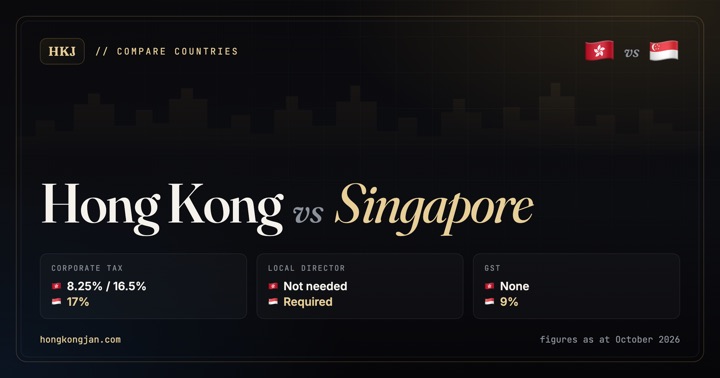
Hong Kong or Singapore? Answer One Question First
Tax rates and forum threads won't settle this. Where your customers actually are will settle it in about a minute.

Using a Hong Kong Holding Company for Greater China
The reason isn't the tax rate. It's having a common law jurisdiction sitting above everything that happens in the mainland.

Nominee Directors in Hong Kong: How They Really Work
Legal, common, and widely misunderstood. The duties don't transfer, and the arrangement doesn't hide anything from your bank.

What a Company Secretary in Hong Kong Actually Does
Most founders tick this box during setup and never think about it again. That's usually where the trouble starts.

Company Secretary Fees in Hong Kong: What to Expect
Quotes run from a few hundred dollars to several thousand for what looks like the same service. The difference is always in what's included.

Hong Kong Annual Return Filing: The Complete Guide
The deadline that catches more founders out than any other, purely because it's tied to a date everyone forgets.

How to Switch Your Hong Kong Company Secretary
The mechanics take about three days. The decision is what people sit on for a year.

Late Annual Return in Hong Kong: What It Costs You
The fee climbs in steps, so the cheapest day to file is always today. Here's the scale and how to close it out.

Adding or Removing a Director in Hong Kong
The form is simple and the deadline is short. Almost every problem here is about timing, not paperwork.

Setting Up Payroll for Your First Hong Kong Hire
Hong Kong keeps payroll simpler than most places. The catch is that the setup steps have real deadlines from day one.

Payroll Services in Hong Kong: What You're Actually Buying
It looks like simple monthly maths. In practice it's MPF deadlines, employer's returns and rules that bite when you get them wrong.

How to Register a Trademark in Hong Kong
HKD 2,000, about six months, ten years of exclusive rights. Few permanent assets cost this little.

Protecting Your Intellectual Property in Hong Kong
Which parts of your business could a competitor legally copy tomorrow? Usually more than you'd think.

Business Advisory in Hong Kong: What You're Paying For
Accounting looks backwards at what happened. Advisory looks forwards at what to do. The timing is the whole point.

Five Signs It's Time to Bring in an Advisor
Most founders run on instinct, and early on that works fine. Then the decisions get bigger.

Business Valuation in Hong Kong: Methods and Triggers
Every founder has a number in their head. The moments that matter need a number that survives scrutiny.

ESG Reporting in Hong Kong: What SMEs Actually Need
No regulator is waiting for your ESG report. Your biggest customer might be, and that's the pressure that actually bites.

Hong Kong Corporate Tax: What Companies Actually Pay
The headline rate is 16.5%. Most small companies pay considerably less than that.

Hong Kong's Offshore Income Exemption: Do You Qualify?
It isn't a loophole, it's written into the law. But it needs substance, and the IRD checks.

Hong Kong Audit Requirements: No Company Is Exempt
No size exemption, no revenue threshold, no way around it. But the cost is almost entirely within your control.

Filing Your Hong Kong Profits Tax Return
The IRD sends the return and you have a month. Most directors have never been told what actually goes in it.

Hong Kong Accounting Requirements Every Director Should Know
Failing to keep proper records isn't just untidy. It's a criminal offence, and it's the director who carries it.

Bookkeeping for Hong Kong Companies: What to Track
Bookkeeping done well is invisible. Done badly, it shows up on your audit invoice with interest.

Hong Kong Salaries Tax: A Guide for Employers and Directors
There's no PAYE here, so nothing comes out of anyone's pay. That shifts the whole burden onto your annual reporting.

How Long to Keep Accounting Records in Hong Kong
Seven years from the end of the accounting period, not from the date on the document. That distinction matters.

What Happens If Your Hong Kong Company Files Tax Late
The IRD doesn't let it slide. And an estimated assessment is usually far bigger than what you actually owed.

Hong Kong Stamp Duty on Shares and Property
Low rates, short deadlines. Getting the timing wrong turns a simple transfer into an expensive problem.

Hong Kong Tax and Accounting: The Director's Guide
Most directors work this out as they go. That's fine right up until the moment it isn't.
Five Signs It's Time to Switch Your Accountant
Switching feels complicated, disloyal and more hassle than it's worth. It's usually none of those things.